
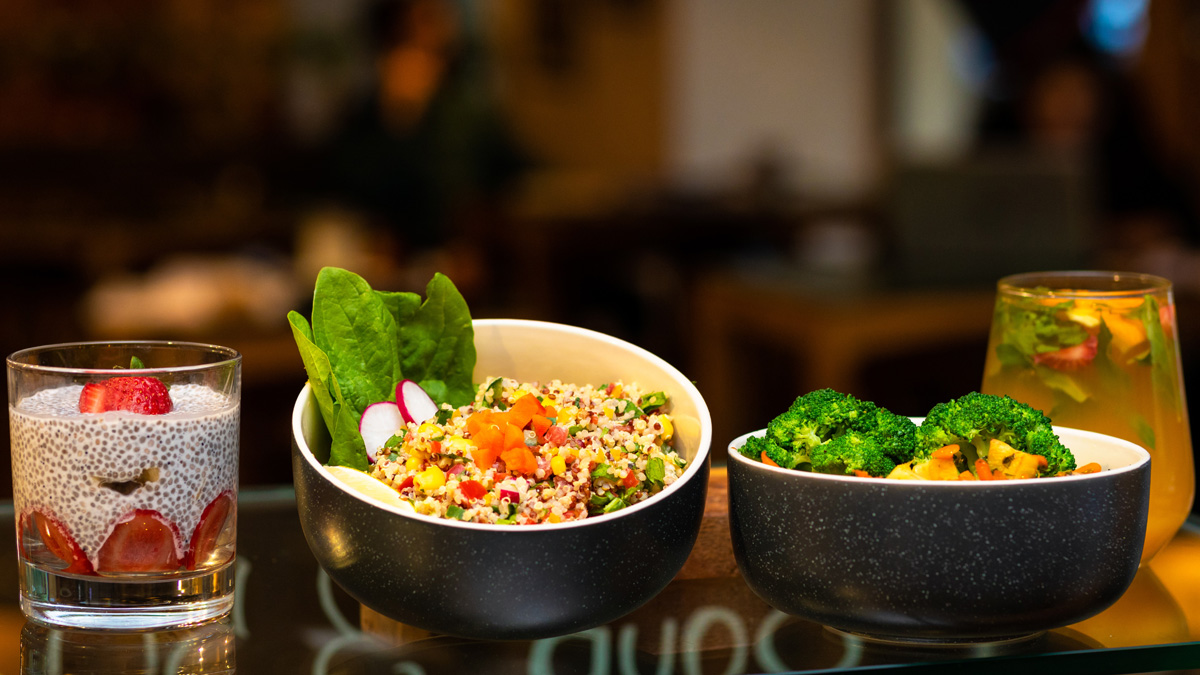
Have you ever finished a full plate of food and thought, “I’d really like something sweet just to finish off that meal”? Or perhaps you find yourself craving something really specific, like chocolate cake or hot chips. Now, you might think this is pretty normal, but craving foods, especially when you’ve got a full belly, is a sign that your body is ‘craving’ balanced nutrition.
In this article, I will discuss tastes, foods and nutrition from an Ayurvedic perspective.
You may have already noticed that most Western foods tend to be sweet or salty. Nearly all processed ‘junk foods’ are sweet or salty, with very few other flavours. Without a variety of flavours in foods, we limit the activation of our full palate of flavours, limiting the variety of nutrients we consume.
Introducing the Six Tastes
According to Ayurveda, consuming a variety of tastes in foods helps satisfy your appetite and provides your body with the balance of nutrition it needs without having to measure grams of food or count calories rigorously. Ayurveda is a 5,000-year-old form of natural medicine from India. It is often referred to as ‘the science of life’, but I prefer to refer to it as a ‘philosophy of living’.
“Taste is the key to nutrition. It guides us to what our body needs.”
– Deepak Chopra
In Ayurvedic medicine, foods are used to help balance the five elements in the body: ether, air, fire, water and earth. With this style of nutrition, you can utilise food as your main source of medicine. Each of the six tastes is known to help balance or activate certain parts of the digestive system. The concept of taste, or ‘rasa’ as it is known in Sanskrit, is divided into six categories:
🔸 Sweet (Madhura) foods include fruits, grains, and pastries. They provide satisfaction and nourishment to the body, contributing to its strength and vitality.
🔸 Sour (Amla): these items, such as lemons, pickles, tamarind and sauerkraut, stimulate the digestive fire and help to increase the absorption of minerals.
🔸 The salty (Lavana) taste is present in foods like beetroot, seaweed, celery, and salt. It enhances appetite and digestion while helping retain moisture in the body.
🔸 We encounter the tongue-tingling pungent (Katu) taste in spicy foods like chilli, onion, pepper and ginger, which aid digestion, purify the body, and refine our senses.
🔸 Bitter (Tikta)– flavoured foods, such as green leafy vegetables, cocoa, turmeric, and bitter melon, are excellent detoxifiers and digestive balancers.
🔸 Lastly, astringent (Kashaya) foods, such as lentils, green apples, and pomegranates, cause a dry sensation in the mouth. They encourage nutrient absorption while simultaneously calming digestion.
A Symphony of Flavours
These six tastes, or rasa, are like notes in music. When a meal combines a range of tastes, it can become a symphony of flavours, providing a more complete and satisfying meal.
Understanding the need for these tastes in our diet is crucial. They don’t perform solo on your palate; they have been linked to various macro- and micronutrients needed by the body. The synergy between these tastes in a meal ensures a complex repertoire of nutrients, making each meal no less than a nutritional symphony orchestra!
Just as you may enjoy a purely instrumental piece of music on its own, a fulfilling ‘meal’ of music becomes more of a sensory experience when several other tastes (notes and instruments) accompany the performance. There is a depth of flavour, a mingling of tastes, and a complementary sapor.
Flavour and digestion
The six tastes not only provide a more complete sensory experience but also contribute to the function of our digestive system.
Sour and bitter foods, which are often absent from the Western diet, stimulate digestive secretions. These secretions help produce digestive enzymes, which can then enhance the absorption of micronutrients in foods, especially fat-soluble vitamins A, D, E, and K.
Pungent foods are said to enhance digestive fire or agni, warm the body, and improve digestion. They can be useful additions to help break down proteins in meals and warm the digestive system.
Sweet foods are known for their building and strengthening qualities. An interesting thing about sweet foods is they tend to activate the tastebuds and increase salivation quickly. In Ayurveda, sweet foods are eaten at the start of a meal to begin digestion rather than at the end.
Salty foods help to increase the appetite and help with the retention of moisture in the body. Added to meals in small quantities, salty foods can help to bring about mineral and fluid balance in the body.
“By incorporating all six tastes in our meals, we can ensure optimal nutrient absorption.”
– Dr. Vasant D. Lad
The key to the six tastes in food is to have them all present in a balanced quantity so that they naturally support digestion and health.
Hot chips and chocolate cake
When we begin to understand how each of the six tastes acts in the body, we can understand how certain foods can influence our health. Let’s take the chocolate cake and hot chips that I mentioned earlier. For the cake, the predominant taste is sweet. Sweet foods provide nourishment and strength to the body, and we know that too much sweet food can make us heavy, lethargic, and overweight.
The same goes for hot chips. For the purpose of this example, let’s say the predominant taste of the hot chips is salty. We know that salty foods can increase appetite. An overly increased appetite can lead to overeating, which can make us feel heavy and lethargic. And we all know it can be difficult to stop eating salty foods once you have started, right?
The Culture of Six Tastes
In contrast, you have probably eaten a meal and been totally satisfied. Perhaps you didn’t need to add something sweet at the end or have something else to complete the meal. Chances are, you’ve eaten a meal with a balance of satisfying and nourishing flavours.
You may wonder how and where I can find these six tastes, especially since Western culture heavily relies on sweet and salty foods. But you needn’t go too far beyond your local international cuisine restaurants to see how the six tastes can be incorporated into meals.
Many oriental cuisines include a range of tastes to stimulate the senses and the appetite. Japanese food often contains rice (sweet), pickles (sour), soy sauce (salty), wasabi (pungent), green leafy vegetables (bitter) and green tea (astringent).
If you have ever eaten at a traditional Indian restaurant, you may have tried a thali plate. This can be viewed as a deconstructed six-tasting platter. A thali plate consists of many small plates containing foods and condiments with several different tastes; you mix and match the components to assemble each mouthful of flavour combinations.
Similar to the Indian thali plate, Ethiopian food can delight the senses. An array of small, flavourful dishes is prepared with various spices, including garlic, fenugreek, ginger, cardamom, and berbere, and consumed with injera, delicious fermented pancakes.
Incorporating the Six Tastes into your meals
Okay, let’s get practical about this. The primary key is to consider your meals as an opportunity to nourish your body, health, senses, and spirit.
Yes, food should be enjoyable, but not in an addictive, craving sense, more of a wholly satisfied and contented way.
So, I’m going to give you some examples of how I include a variety of tastes in everyday foods that I eat, we’ll zhoosh up some simple dishes to make them more tasty and nutritious:
Vegemite on toast
Oh, this is such an Aussie classic. It relies heavily on sweet (bread) and salty (vegemite) tastes. This is definitely not what I would consider a complete meal, so let’s change it up a little, ahem, just a little.
Adding more tastes to this Aussie snack will automatically add nutrition and texture. So let’s start with swapping out the vegemite for equally salty but more nutritious miso paste, then add some garlicky hummus (pungent and astringent), cucumber (sweet), sauerkraut (sour) and lettuce greens (bitter).
Lentils with steamed broccoli and sweet potato
Although a meal of lentils and steamed vegetables can be delicious and satisfying, we can make it more flavourful by adding more tastes and texture.
I would start by adding some cooked quinoa (sweet), some tamari or coconut aminos (salty), a little olive oil (bitter) and some Korean kimchi (sour, pungent and astringent). Yum!
Chickpeas with salad
Salad does not need to be boring, and it can be a complete meal, too. Let’s dress up a simple lunchtime salad with some flavours and nutritional balance.
To give a simple salad a bit more depth, I suggest adding some leftover roasted pumpkin (sweet), some leftover cooked brown rice (sweet), grated beetroot (bitter and sweet), fresh chopped green beans (astringent), and homemade salad dressing with tahini, lemon juice, and freshly grated ginger (astringent, sour, pungent). Let’s top it off with a sprinkling of pepitas (bitter).
You don’t need to prepare an Indian thali plate or a complex Ethiopian platter to include the six tastes in your meals. You also don’t need to include every taste with each meal – experiment with different foods and see how many you can include in a dish.
Try including as many of the six tastes as possible in your meals and observe how you feel after eating these foods. Do you feel more satisfied? Do you still crave a certain type of food after meals? Let me know how you go. I would love to hear about your experiences.

Leave a Reply